AI WRITING
AI Writing Tools
Find AI writing software for blogging, SEO, copywriting, marketing,
email, social media and everyday writing tasks.
PhoneLabs explores the tools behind modern content workflows, with practical
information about what each tool is designed to do and where it fits best.
Blogging
SEO
Copywriting
Email
Marketing
Explore Tools
How to Choose
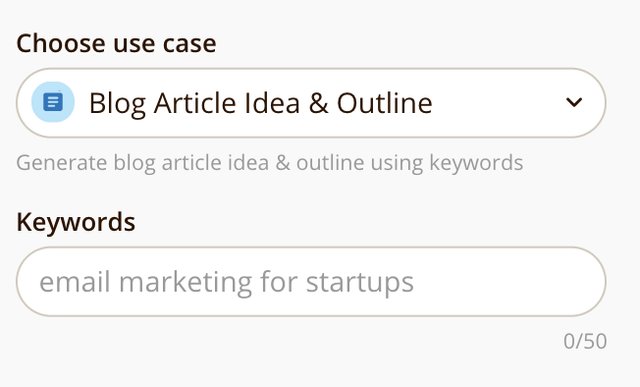
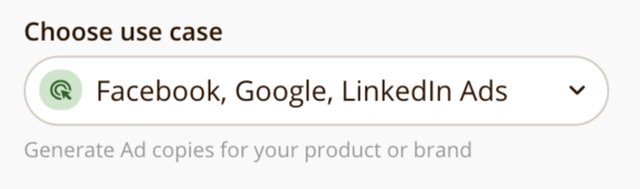
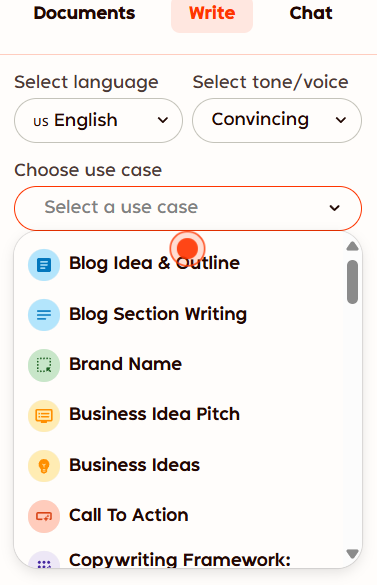
Example of an AI writing workflow
What Are AI Writing Tools?
AI writing tools are software applications that use artificial intelligence
to help with the creation, editing, rewriting or improvement of written content.
The category includes everything from general-purpose writing assistants to
more focused tools for copywriting, SEO, email, content marketing and editing.
That means there is no single feature that defines every AI writer. The useful
question is what the software can do within the writing workflow you actually use.
START WITH THE TASK
What Do You Need an AI Writing Tool For?
The best starting point is the type of writing you do most often.
AI Writing Tools for Blogging
Useful features can include idea generation, outlines, paragraph drafting,
expansion and rewriting.
AI Writing Tools for SEO
Look for tools that can support titles, meta descriptions, outlines,
content drafts and search-focused editing.
AI Copywriting Tools
Useful for ads, product descriptions, landing pages, hooks and calls to action.
Different writing tools organize their workflows around specific use cases.
AI Writing Tools by Workflow
Email Writing
Draft outreach, replies, newsletters and professional messages faster.
Marketing Content
Create campaign copy, promotional text, headlines and calls to action.
Rewriting & Editing
Change wording, improve clarity, shorten text or expand an existing draft.
Social Media
Generate post ideas, captions and short-form content for social channels.
Ecommerce Copy
Support product descriptions, category copy and promotional text.
Creative Writing
Generate ideas and drafts for creative formats and storytelling.
Features to Compare in AI Writing Software
Once you know your use case, compare the features that actually affect your workflow.
|
Feature |
Why It Matters |
Questions to Ask |
|---|
|
Content Generation |
Determines what types of content you can draft. |
Does it support my workflow? |
|
Rewriting |
Useful for editing existing content. |
Can I change length or tone? |
|
Tone & Brand Voice |
Helps maintain a consistent writing style. |
Can the tool adapt to my style? |
|
Languages |
Important for multilingual publishing. |
Which languages are supported? |
|
Integrations |
Can reduce friction in your workflow. |
Does it work where I write? |
|
Usage Limits |
Affects how much content you can generate. |
Are there character or generation limits? |
Free vs Paid AI Writing Tools
Free Tools
Free plans can be useful for trying a platform and understanding its workflow
before paying for more capacity or features.
Limits often apply to generations, usage, advanced features or integrations.
Paid Tools
Paid plans may provide greater usage, additional features, more customization
and support for heavier workflows.
Compare the plan against your actual monthly content needs rather than price alone.
BUYING GUIDE
How to Choose the Right AI Writer
1. Start With Your Task
Decide whether you mainly need blogging, SEO, copywriting, email or editing.
2. Check the Workflow
Make sure the tool fits how you already create and edit content.
3. Compare Limits
Look at generations, characters, languages and other usage restrictions.
4. Review Editing
Check whether rewriting, shortening, expansion and tone controls are useful.
5. Check Integrations
Browser extensions and integrations can matter more than extra features.
6. Test Before Committing
Use a free plan or trial where available before adopting a paid workflow.
AI Writing Tools for SEO
AI writing software can support SEO workflows such as generating titles,
meta descriptions, article outlines, supporting sections and content variations.
But SEO performance does not come from AI generation alone. Content still needs
to satisfy search intent, provide useful information, be accurate and offer value
beyond simply producing more text.
PhoneLabs SEO Note
Use AI to speed up parts of the workflow, not as a replacement for research,
editing and human judgment.
Why Human Editing Still Matters
AI-generated content can speed up drafting, but the final copy should be checked
for facts, context, originality, tone and clarity before publication.
This is particularly important for business content and SEO content where the reader
expects useful information rather than generic text.
FEATURED AI WRITING TOOL
Explore Rytr
Rytr currently offers a broad range of writing use cases, including content creation,
editing, SEO-related workflows, marketing copy and tone matching.
AI Writing Tools FAQ
What are AI writing tools?
AI writing tools are software applications that use artificial intelligence
to help create, rewrite, edit or improve written content.
What can AI writing tools be used for?
Common use cases include blog writing, SEO content, marketing copy,
email, social media, rewriting and general writing assistance.
Can AI writing tools write blog posts?
Many AI writing platforms support blog workflows such as generating ideas,
outlines, sections and draft content.
Can AI writing tools help with SEO?
They can support SEO-related writing tasks such as titles, meta descriptions,
outlines and content drafting, while human review remains important.
What is an AI writing assistant?
An AI writing assistant helps users draft, edit, rewrite or improve text using AI.
Are AI writing tools free?
Some offer free plans or trials, while others require paid subscriptions
or impose usage limits on free accounts.
What should I compare between AI writing tools?
Compare use cases, editing features, tone controls, languages, integrations,
usage limits and pricing based on your workflow.
What is Rytr?
Rytr is an AI writing assistant with a broad range of content creation
and editing use cases.
Does Rytr support different writing tones?
Yes. Rytr provides tone-related functionality and custom tone options.
Does Rytr support SEO writing?
Yes. Rytr's current use-case library includes SEO-related writing workflows,
including SEO meta title generation.
Should I publish AI-generated content without editing?
No. Human review is important for accuracy, context, quality and the final
usefulness of the content.
AI WRITING
Find an AI Writing Tool for Your Workflow
Start with the task you need to solve, compare the features that matter,
then explore the individual tool reviews on PhoneLabs.
Read Rytr Review
Try Rytr
Some links on this page are affiliate links. PhoneLabs may earn a commission
at no additional cost to you.
More AI Tools on PhoneLabs
Rytr Review
This AI Writing directory will expand as more writing tools are researched,
reviewed and added to PhoneLabs.